The benefits of PSA nitrogen generator manufacturers for industrial applications

Industries need reliable nitrogen solutions for their operations. The global nitrogen market is projected to reach USD 20.5 billion by 2033, growing at an annual rate of 6.5%. PSA nitrogen generator manufacturers offer smart and cost-effective systems for producing nitrogen on-site. These generators reduce transportation expenses and consume less energy, benefiting the environment. Their versatility makes them valuable across various sectors, including food and beverage, pharmaceuticals, and electronics.
Key Takeaways
PSA nitrogen generators make pure nitrogen right where it's needed. They use Pressure Swing Adsorption technology to remove unwanted gases from compressed air.
These generators help industries save money. They do this by getting rid of delivery and storage costs. They also use less energy, which leads to big savings over time.
PSA systems give a steady supply of nitrogen. They are easy to maintain and have long-lasting parts. This helps keep industrial operations running smoothly.
Making nitrogen on-site with PSA technology reduces carbon emissions. It also helps support sustainable manufacturing by lowering transport and energy needs.
Industries such as food and beverage, pharmaceuticals, and electronics gain from PSA nitrogen generators. They improve product quality, safety, and efficiency.
PSA Nitrogen Technology
How PSA Works
Pressure Swing Adsorption (PSA) technology is key for nitrogen generation systems. This method uses adsorbents to take nitrogen from air. The process starts when compressed air goes into vessels filled with Carbon Molecular Sieve (CMS). In these vessels, oxygen, moisture, and carbon dioxide are captured at high pressure. This lets high-purity nitrogen gas flow through.
The operation has two main steps: adsorption and desorption. During adsorption, one vessel traps impurities. The other vessel releases the trapped gases when pressure drops. This cycle keeps nitrogen production going, ensuring it works well and reliably. The table below shows the main ideas behind PSA technology:
Principle Aspect | Explanation |
|---|---|
Adsorption at High Pressure | Gases under high pressure stick to solid surfaces (adsorbents) based on their size and attraction. |
Selective Adsorption | Different gases stick with different strengths; for nitrogen, oxygen, moisture, and CO2 stick more, letting nitrogen pass. |
Desorption at Low Pressure | When pressure drops, trapped gases are released (desorbed), getting the adsorbent ready for the next cycle. |
Cyclic Operation | Two adsorber vessels work back and forth to keep nitrogen production going by switching between adsorption and desorption. |
Adsorbent Materials | Materials like zeolites and carbon molecular sieves have large surfaces and special properties for selective adsorption. |
Operating Conditions | The process works near room temperature, switching between high and low pressure to separate nitrogen from air. |
Key Components
A PSA nitrogen generator has several important parts that help it work better. These include:
Adsorption Towers: Two towers filled with CMS material switch between capturing and releasing gases, ensuring continuous nitrogen production.
Air Compressors: These machines provide the needed compressed air to the system.
Air Dryers and Filters: These parts keep air clean by removing moisture and dirt, protecting the CMS and ensuring high-purity nitrogen.
Nitrogen Buffer Tanks: These tanks help keep pressure and flow steady during the switching process between adsorption columns.
Automated Control Valves: These valves control the switching between capturing and releasing phases, improving system performance.
Sensors: These devices check pressure, temperature, and dew point to protect the CMS and keep air quality good.
The mix of these parts allows for efficient onsite nitrogen generation. By reducing downtime and using compressed air wisely, PSA nitrogen generators provide reliable high-purity nitrogen for many industrial uses.
Benefits of PSA Nitrogen Generators

Cost-Effectiveness
PSA nitrogen generators help industries save a lot of money. They make nitrogen on-site, so companies do not have to buy, transport, or store it. The Adgas Tech blog says that businesses can keep their budgets steady by using these systems. This change avoids delivery fees and problems with suppliers. It also helps companies plan their resources better.
For example, a case study from On Site Gas shows how much money a company saved by switching to a PSA nitrogen generator. This company worked six days a week for sixteen hours each day. They spent over $27,000 every year on bulk nitrogen, including rental and delivery costs. After they started using an onsite PSA nitrogen generator, their yearly costs dropped to about $2,700. This change saved them nearly $25,000 each year. It paid for itself in just 17 months and showed the long-term money benefits of PSA systems.
Besides saving money, PSA nitrogen generators also use energy more efficiently. They improve the ratio of compressed air to nitrogen, which cuts down on waste. By not using energy-heavy methods like fractional distillation or transporting nitrogen cylinders, PSA generators lower electricity use and carbon emissions. A case study from a craft brewery found that switching from delivered bulk nitrogen to an onsite PSA nitrogen generator reduced their annual carbon emissions by 99%. This shows the environmental and financial benefits of these systems.
Reliability
Reliability is very important for industries that need a steady supply of nitrogen. PSA nitrogen generators are great at this, providing steady performance through specific performance indicators (PIs). These indicators include nitrogen purity, productivity, recovery, and air demand. High nitrogen purity levels, usually between 95% and 99.999%, ensure good product quality and efficiency. The productivity and air demand numbers show how much nitrogen is made and how much air is needed.
The design of PSA systems makes them even more reliable. They have two adsorption towers that switch between capturing and releasing gases. This keeps a constant supply of nitrogen. This back-and-forth operation reduces downtime and boosts efficiency. Regular maintenance, like checking valves and the Carbon Molecular Sieve (CMS) media, helps keep these systems reliable for a long time. With good care, the CMS can last over ten years, which lowers maintenance costs and increases operational uptime.
Environmental Impact
Reduced Emissions
PSA nitrogen generators greatly lower carbon emissions in industries. They make nitrogen on-site, so there is no need to transport or store nitrogen cylinders. These cylinders are usually filled using energy-heavy cryogenic distillation. On-site generation uses 30% to almost 70% less electricity than traditional methods. As a result, industries see a big drop in greenhouse gas emissions.
Also, PSA generators stop nitrogen waste from leaks in stored cylinders. They help reduce landfill waste from old tanks. All these factors help lower the carbon footprint, making PSA technology a good choice for the environment.
Sustainable Practices
Using PSA nitrogen generators supports sustainable practices in manufacturing. More people know about the environmental benefits, so industries prefer on-site nitrogen generation instead of traditional supply methods. This change cuts down on transportation emissions and reduces the energy needed for liquid nitrogen and cylinder deliveries.
Key sustainable practices made possible by PSA technology include:
Better energy efficiency with advanced adsorbent materials and improved cycle times.
Lower operational costs by getting rid of delivery fees, tank rentals, and product loss during transport.
Safer workplaces by reducing risks from handling high-pressure cylinders.
Use of IoT and smart monitoring systems that improve performance and energy efficiency.
The table below shows the cost differences between delivered nitrogen and on-site PSA nitrogen:
Cost Aspect | Delivered Nitrogen Cost (per 100 cubic feet) | On-site PSA Nitrogen Cost (per 100 cubic feet) | Additional Notes |
|---|---|---|---|
Delivered Liquid Nitrogen | $0.35 to $1.50 | N/A | Varies by market and delivery location |
Delivered Nitrogen in Cylinders | Up to $3.00 | N/A | Higher cost due to cylinder handling and transport fees |
Initial On-site Generation Cost | N/A | Approx. $0.21 | Includes capital investment; ROI in 9-24 months depending on existing equipment |
Operational Cost After Payback | N/A | Approx. $0.11 | Covers maintenance and energy costs only |
Product Loss During Transport | Up to 10% loss | Eliminated | Loss occurs during transport and storage of delivered nitrogen |
Additional Costs Eliminated | Delivery fees, tank rental fees, hazmat fees | Eliminated | These recurring costs are avoided with on-site generation |
Environmental Impact | High (due to transport emissions and liquefaction energy) | Reduced | On-site generation avoids transport emissions and energy-intensive liquefaction process |
By using PSA nitrogen generators, industries not only improve their efficiency but also support sustainability goals, helping create a greener future.
Industrial Applications of Nitrogen Generators
Food and Beverage
PSA nitrogen generators are very important in the food and beverage industry. They provide high-purity nitrogen that is needed for many uses, like modified atmosphere packaging (MAP), filling drinks, and storing food. Using nitrogen helps keep food fresh and prevents spoilage, which makes products last longer.
The table below shows the specific nitrogen needs and how PSA nitrogen generators help meet them:
Aspect | Details |
|---|---|
Nitrogen Requirements | Reduces spoilage and oxidation; protects against germs; extends shelf life by taking out oxygen |
Food-grade Nitrogen Standards | Must avoid contamination and keep product quality high |
Applications in Food & Beverage | Modified Atmosphere Packaging (MAP), Nitrogen Blanketing, Beverage Filling |
Benefits of PSA Nitrogen | Meets purity and flow rate needs; supports food safety rules; improves product freshness and quality |
PSA nitrogen generators keep the oxygen level in packaging below 1%. This stops oxidation and slows down the growth of germs, keeping flavor, color, and nutrition intact. For example, the shelf life of canned nuts can increase by over three months when nitrogen replaces oxygen in the packaging. Also, using nitrogen creates a safer environment by slowing down harmful bacteria like Salmonella and E. coli.
Pharmaceuticals
In the pharmaceutical industry, PSA nitrogen generators are essential for keeping products safe and following strict rules. They provide a steady, on-site source of high-purity nitrogen gas, which is important for creating safe environments during different manufacturing steps.
Key uses include:
Inerting and blanketing to protect medicines that are sensitive to oxygen.
Removing dissolved oxygen during the making of sterile drugs.
Helping with freeze drying and moving products.
PSA nitrogen generators create nitrogen with purity levels up to 99.999%, which meets pharmaceutical standards. This high purity is very important for packaging medicines, where keeping quality and sterility is crucial. The generators also remove risks from outside nitrogen supplies, like contamination and supply issues.
Electronics
The electronics industry gains a lot from PSA nitrogen generators, which provide a steady and reliable supply of high-purity nitrogen. This nitrogen is key for stopping oxidation during soldering, which makes solder joints stronger and reduces mistakes.
Key benefits include:
Cost-effective operation by using compressed air and lowering energy use.
Improved safety by avoiding the handling of high-pressure cylinders.
Environmental benefits due to less transportation emissions.
In semiconductor manufacturing, PSA nitrogen generators produce nitrogen with purity levels up to 99.9995%. This high purity stops oxidation of copper wires during chip packaging and supports safe environments for processes like 3D metal printing. The technology also allows for real-time control of nitrogen purity and flow, meeting the strict needs of the electronics industry.
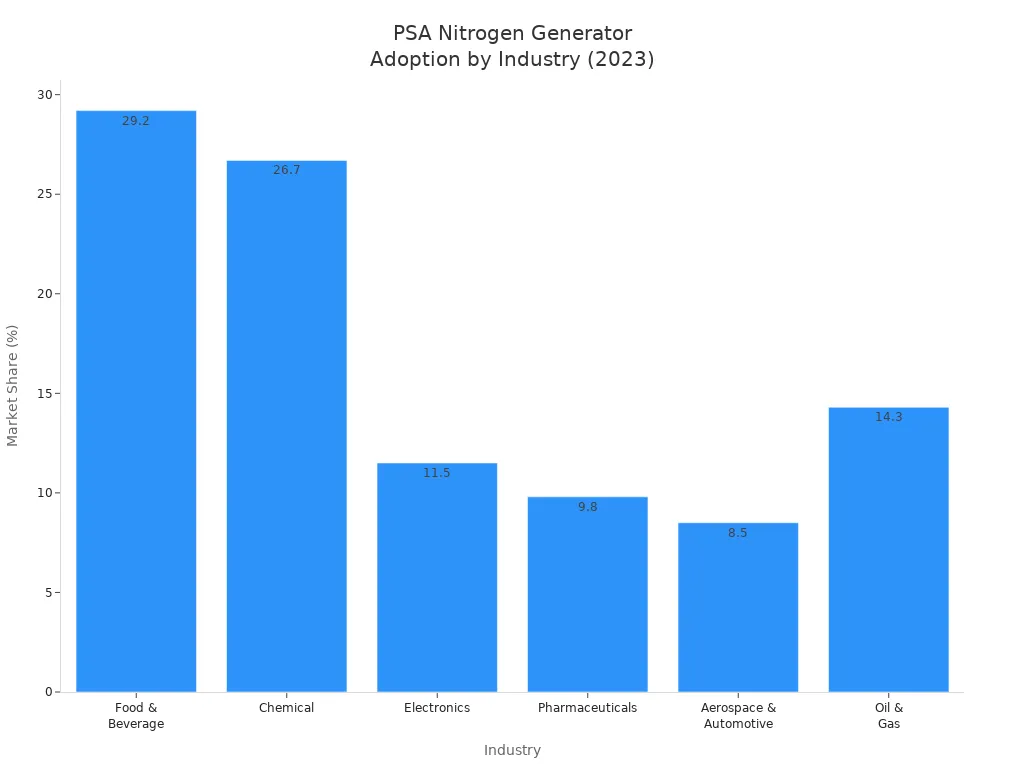
The use of PSA nitrogen generators in these industries shows their flexibility and effectiveness in improving product quality, safety, and efficiency.
PSA nitrogen generators have many benefits for industries. They help save money by getting rid of delivery costs and using less energy. Their dependability makes sure there is always high-purity nitrogen available, which is important for keeping product quality in different fields. Also, these systems help the environment by cutting down carbon emissions and promoting efficient practices.
Industries should think about using PSA nitrogen generators to improve efficiency and save money.
For customized solutions, companies can work with manufacturers who focus on creating systems that fit their specific needs. This teamwork can lead to better performance and reliability in nitrogen production.
FAQ
What is a PSA nitrogen generator?
A PSA nitrogen generator makes nitrogen on-site using Pressure Swing Adsorption technology. It takes nitrogen from air by capturing unwanted gases. This way, it provides a steady supply of high-purity nitrogen for many industrial uses.
How does a PSA nitrogen generator save costs?
PSA nitrogen generators remove the need to buy and transport nitrogen cylinders. They lower operational costs by cutting delivery fees and energy use, which leads to big savings over time.
What industries benefit from PSA nitrogen generators?
Industries like food and beverage, pharmaceuticals, and electronics gain from PSA nitrogen generators. These systems give high-purity nitrogen that is important for keeping product quality and safety in manufacturing.
How pure is the nitrogen produced by PSA generators?
PSA nitrogen generators can make nitrogen with purity levels from 95% to 99.999%. This high purity is very important for jobs that need strict quality control, like pharmaceuticals and electronics manufacturing.
What maintenance do PSA nitrogen generators require?
PSA nitrogen generators need regular maintenance, like checking valves and watching the Carbon Molecular Sieve (CMS) media. Good care helps keep the system working well and can make it last over ten years.