Card Stock vs. Regular Paper: Which One Should You Choose?


When you plan your next project, think about the paper you need. Choosing card stock or regular paper can be confusing. Each type has special features. It is important to know what is card stock and how it is different from regular paper. Whether you are crafting, printing, or making invitations, knowing your materials helps you get the best results.
Key Takeaways
Card stock is thicker and stronger than regular paper. This makes it great for projects that need to last, like business cards and invitations.
Regular paper is lighter and cheaper. It is perfect for everyday tasks like printing documents and taking notes.
Think about the weight and finish of the paper when you choose. Heavier card stock looks more professional. Regular paper works well for printing many copies.
Card stock has more colors and finishes. This gives you more creative choices for crafting and design projects.
When you budget, keep in mind that card stock usually costs more than regular paper. So, plan based on what your project needs.
What is Card Stock?
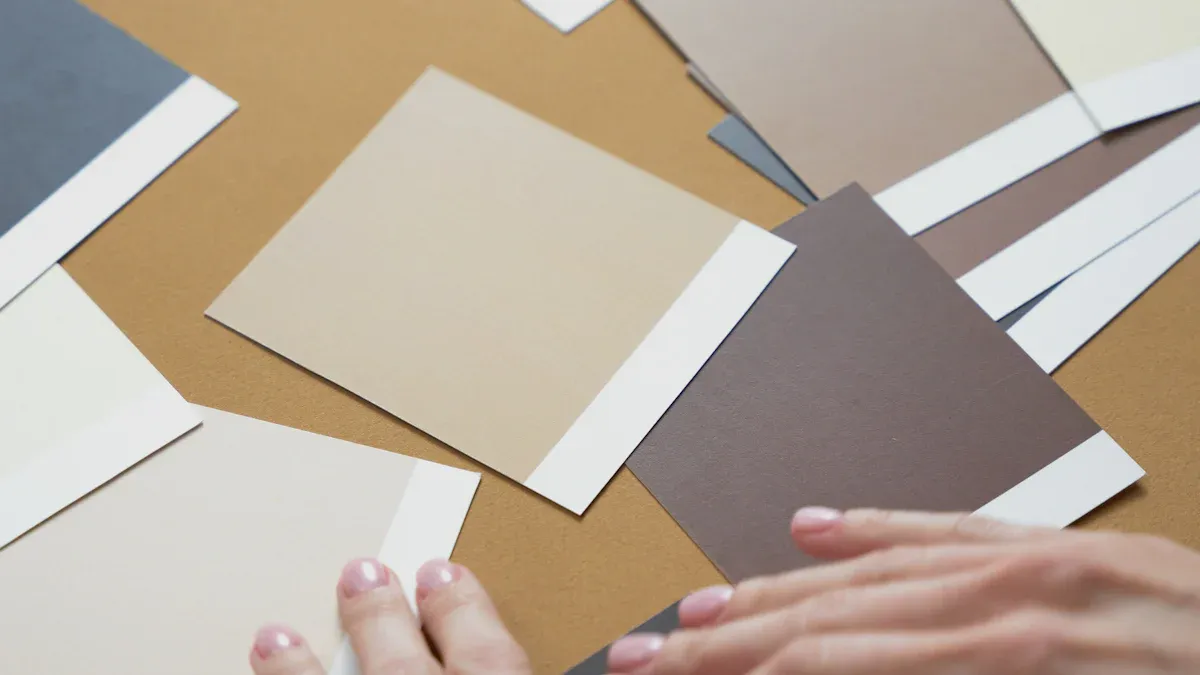
Card stock is a special kind of paper. It is thicker and stronger than regular writing and printing paper. This makes it a favorite for many projects. You might hear it called cover stock or pasteboard. Here are some important facts about it:
Characteristics of Card Stock
Thickness: Card stock usually measures between 14pt and 18pt thick. It is stronger than regular paper but not as thick as cardboard.
Durability: It lasts longer than regular paper. This means it can handle wear and tear better. This quality makes it great for things that need to last.
Weight: Card stock comes in different weights. These weights are often shown in pounds (lb) or grams per square meter (GSM). For example, 80 lb card stock is about 225 GSM. Heavier types can go up to 450 GSM.
Here’s a table showing some common weights and what they are used for:
Cardstock Weight | Thickness (pt) | Common Uses |
|---|---|---|
14pt | 14pt | Business cards, postcards, retail tags |
16pt | 16pt | Premium business cards, notebook covers |
18pt | 18pt | Extra-thick business cards, postcards |
Card stock is also known as pasteboard or cover stock. It is often used as a strong paper choice.
Common Uses of Card Stock
Card stock is used in many ways. Here are some popular uses:
Business Cards: Its thickness and strength make it great for professional business cards that impress people.
Invitations: For weddings, parties, or other events, card stock is a strong base for beautiful invitations.
Greeting Cards: You can make unique greeting cards that pop with colorful card stock.
DIY Projects: If you like crafting, card stock is a flexible material for scrapbooking, making photo frames, or creating custom decorations.
Packaging: Many products use card stock for packaging because it is strong and protective.
What is Regular Paper?
Regular paper is a useful material you probably use daily. It is thinner and lighter than card stock. This makes it good for many tasks. You can find it in your printer, at school, or in your office. Let’s look at its features and common uses.
Characteristics of Regular Paper
Regular paper comes in different weights and finishes. These affect how it works. Here are some important properties:
Weight: Regular paper usually weighs between 16 and 32 pounds (lbs) in the U.S. This weight can change based on the paper type. For example, bond paper often weighs between 16 and 36 lbs. Cover paper can weigh from 60 to 120 lbs.
Smoothness: A smooth finish helps print quality. This feature keeps ink on the surface. It makes images and text clearer.
Brightness: Regular paper brightness goes from 92 to 100. Higher brightness levels make colors look better. This makes your prints more attractive.
Jam-free Performance: Many regular papers are made to reduce printer jams. This can save you time and stress.
Here’s a table showing the weight ranges and common uses of different types of regular paper:
Paper Type | Weight Range (lbs) | Weight Range (GSM) | Common Uses |
|---|---|---|---|
Bond | 16, 20, 24, 28, 32, 36 | Varies | Printer paper, letterhead, stationery |
Book | 30 to 115 | Varies | Books, booklets, catalogs, magazines |
Cover | 60 to 120 | Varies | Business cards, menus, invitations |
Index | 90, 110, 140 | Varies | Index cards, postcards, tabs |
Tag | 50, 60, 70, 80, 100 | Varies | Retail signage, price tags, menus |
Text | 50, 60, 70, 80, 100 | Varies | Brochures, letterhead, stationery |
Common Uses of Regular Paper
You will see regular paper in many everyday situations. Here are some common uses:
Printing Documents: You can print letters, reports, and memos on regular paper. It’s the best choice for most office tasks.
Photocopying: Regular paper is great for making copies of important documents.
Taking Notes: In class or meetings, you can easily write down ideas and notes.
Creating Flyers and Brochures: If you want to promote an event, regular paper is good for making eye-catching flyers.
DIY Projects: You can use regular paper for crafts like origami or simple decorations.
In schools, regular paper is important for quizzes, worksheets, and other activities. It’s a must-have in both schools and offices, making it a reliable choice for many projects.
Thickness and Weight Comparison
When you pick between card stock and regular paper, thickness and weight matter a lot. Let’s look at how they are different.
Card Stock Thickness
Card stock is thicker than regular paper. This makes it feel strong. Usually, standard card stock is about 406.4 microns (16pt) thick. This thickness is great for projects that need to last, like business cards or invitations. Here’s a quick look at the thickness:
Paper Type | Thickness (Microns) | Thickness (Points) |
|---|---|---|
Standard Card Stock (16pt) | 406.4 mic | 16pt |
Regular Paper (20lb) | 75-100 mic | 20-24pt |
The thickness of card stock helps it last longer. Thicker card stock is best for high-quality prints. It looks professional and impresses people.
Regular Paper Thickness
Regular paper is much thinner. It usually ranges from 75 to 100 microns, depending on its weight. For example, standard copy paper weighs about 20 lb, which is around 75 gsm. Here’s a table showing common weights of regular paper:
Weight (lb) | Weight (gsm) | Description |
|---|---|---|
20 lb | 75 gsm | Standard copy paper for everyday use. |
24 lb | 90 gsm | Ideal for business letters. |
28-32 lb | 105-120 gsm | Good for important documents. |
The lighter weight of regular paper is great for daily tasks like printing or taking notes. But it might not be strong enough for projects that need to last.
The weight of the paper affects how it works with different printing methods. Thicker card stock is perfect for invitations and greeting cards. It gives them a fancy feel. On the other hand, lighter card stock is good for bulk printing or less formal uses.
Finishes Available
When you think about finishes, both card stock and regular paper have many choices. These finishes can change how your projects look and feel. Let’s see what options are available for each type.
Card Stock Finishes
Card stock has different finishes, each for various uses. Here are some popular choices:
Metallic Card Stock: This finish is shiny and reflective. It’s great for designs that stand out.
Uncoated Card Stock: This type feels natural and is easy to write on. It’s perfect for projects needing an organic look.
Coated Card Stock: This finish has a smooth surface that makes colors pop. It’s best for high-quality prints.
Digital Card Stock: Made for digital printing, this finish gives great results with inkjet and laser printers.
Super Heavy Card Stock: This is thicker than regular card stock. It offers extra strength for projects that need to last.
Parchment Card Stock: With a textured finish, this type looks classic and is often used for formal invitations.
Recycled Card Stock: This eco-friendly choice is good for those wanting to help the environment.
FSC Certified Card Stock: This type comes from forests that are managed responsibly.
Here’s a quick comparison of coated and uncoated card stock finishes:
Feature | Coated Card Stock | Uncoated Card Stock |
|---|---|---|
Surface | Smooth, even surface enhancing appearance | Natural, textured feel |
Color Vibrancy | More vibrant and sharp due to ink not soaking in | Softer, muted colors as ink absorbs into fibers |
Durability | More durable due to protective coating | Less durable, prone to wear and moisture damage |
Writable | Difficult to write on | Easier to write on |
Cost | Generally higher due to processing | Generally lower, more budget-friendly |
Eco-Friendliness | Less eco-friendly due to processing | More eco-friendly, easier to recycle |
Regular Paper Finishes
Regular paper also has many finishes for different needs. Here are some common finishes you might see:
Gloss: This finish is shiny, making it great for bright color printing.
Dull: With low shine, this finish works well for projects with text and images.
Satin: This finish has a medium sheen, good for text-heavy projects needing bright colors.
Matte: A no-gloss finish, matte paper gives colors a flat look, perfect for postcards.
Smooth: Very smooth paper helps colors show well, making it good for many projects.
Laid: This textured finish is often used for book covers and brochures.
Linen: Textured like linen fabric, this finish is great for fancy invitations.
Vellum: With a light texture, vellum works well for images and adds a nice feel.
Felt: This finish looks handcrafted, making it good for high-end packaging.
Choosing the right finish can improve your project, whether you use card stock or regular paper. Think about what you want to achieve and pick a finish that fits your design.
Color Options
When you think about colors, both card stock and regular paper have many choices. But the number and brightness of colors can be very different.
Card Stock Colors
Card stock is great for color choices. You can find many options for your projects. Here are some popular colors:
Bright colors like neon and metallic
Soft pastel colors for a gentle look
Bold colors that catch the eye
This variety helps you make amazing designs that stand out. Whether you’re making invitations or special greeting cards, card stock lets you pick colors that fit your ideas.
Regular Paper Colors
Regular paper usually has fewer color choices. Most of the time, you will see it in simple colors like white, cream, and light gray. Some special papers may have more colors, but they don’t match the wide range of card stock.
Here’s a quick look at the color choices between card stock and regular paper:
Feature | Specialty Card Stock | Regular Paper |
|---|---|---|
Variety of Colors | Fewer color options | |
Texture | Different textures for a nice look | Usually smooth and even |
Printability | Better print quality with coatings | Normal print quality |
Customization | Lots of customization choices | Limited customization |
As you can see, card stock has more colors and finishes. This makes it a better choice for projects where color and texture matter. So, when you choose between the two, think about how important color is for your project!
Pricing Factors
When it comes to choosing between card stock and regular paper, pricing plays a big role. You want to make sure you get the best value for your project. Let’s break down the costs for both options.
Card Stock Pricing
Card stock tends to be more expensive than regular paper. The price can vary based on thickness, finish, and brand. For example, a pack of high-quality card stock can range from $10 to $30 for 50 sheets. If you need specialty finishes, like metallic or textured options, expect to pay even more.
Regular Paper Pricing
Regular paper is generally more budget-friendly. You can find standard printer paper for as low as $5 for a ream of 500 sheets. However, prices can change based on weight and finish. Here’s a quick look at how different types of regular paper stack up:
Brand | Finish | Weight | Price |
|---|---|---|---|
Neenah | Astroparche | Smooth, No Gloss | 60 lb. Text |
Neenah | Classic Crest | Smooth, No Gloss | 24 lb. Bond |
Neenah | Classic Linen | Textured, No Gloss | 24 lb. Bond |
Neenah | Royal Sundance | Fiber | 24 lb. Writing |
You’ll notice that the price varies depending on the type of paper you choose. Here are some common types and their typical weight ranges:
Bond paper: Ranges from 16 to 36 pounds, used for everyday printing and letterhead.
Book paper: Ranges from 30 to 115 pounds, used for books and magazines.
Cover paper: Ranges from 60 to 120 pounds, used for business cards and invitations.
Index paper: Ranges from 90 to 140 pounds, used for index cards and postcards.
Tag paper: Ranges from 50 to 100 pounds, used for signage and price tags.
Text paper: Ranges from 50 to 100 pounds, used for brochures and stationery.
When planning your budget, consider how much you need and the quality you want. If you’re working on a big project, buying in bulk can save you money.
Choosing the Right Option
When you choose between card stock and regular paper, think about some important things. Each paper type has different uses. So, knowing what your project needs is very important.
Factors to Consider
Here are some key points to remember:
Weight: The weight of the paper affects how thick and strong it is. Heavier card stock is thicker and tougher. This makes it great for projects that need to last, like business cards or greeting cards.
Brightness: Brighter paper makes colors look more vivid. If your project needs to stand out, use brighter paper.
Opacity: This tells you how much light can go through the paper. If you want to print on both sides, opacity matters. It helps prevent seeing the print from the other side.
Finish: The finish type, whether coated or uncoated, changes how the paper looks and feels. A glossy finish makes colors pop, while a matte finish gives a softer look.
When should you use card stock? If you want something strong and professional, card stock is the way to go. But when should you use regular paper? Regular paper is good for everyday tasks like printing documents or taking notes.
Choosing between card stock and regular paper depends on what you need for your project. Card stock is strong and feels high-quality. This makes it great for business cards and invitations. Regular paper is cheaper and works well for everyday tasks like printing documents.
Here are some important points:
Card stock is thicker and makes a strong first impression, especially for business cards (350 GSM).
Regular paper is light and affordable for large amounts (90 GSM).
More people care about sustainability, so there is a move towards recycled materials.
As you plan your next project, think about these points to make the best choice for your needs!
FAQ
What is the main difference between card stock and regular paper?
Card stock is thicker and stronger than regular paper. You use card stock for projects that need to last, like business cards or invitations. Regular paper is lighter and better for everyday tasks, like printing documents.
Can I print on both card stock and regular paper?
Yes, you can print on both! But, card stock needs a printer that can handle thicker paper. Regular paper works well with most printers, so it’s a good choice for daily printing.
Is card stock more expensive than regular paper?
Yes, card stock usually costs more than regular paper. Prices change based on thickness and finish. If you want to save money, regular paper is a cheaper option for everyday use.
Can I use card stock for crafting?
Absolutely! Card stock is great for crafting. Its strength and many colors make it perfect for scrapbooking, card making, and other DIY projects. You’ll see how well it holds up!
How do I choose the right paper for my project?
Think about what your project needs. Use card stock for strength and a professional look. Pick regular paper for everyday tasks. Consider weight, finish, and color to find the best choice for your needs!