Maximizing ROI with Nitrogen Generation Systems

The global nitrogen generation market is growing fast. It was worth about USD 12.5 billion in 2023. This amount is expected to hit USD 23.8 billion by 2032. This growth is due to high demand in industries like food, drinks, chemicals, and medicine. You can take advantage of this trend by using a nitrogen generation system for your work.
Switching to making nitrogen on-site has many benefits. It cuts out delivery costs. It also helps keep your budget steady. Plus, it makes sure you have a steady supply of nitrogen. This change not only makes things more reliable but also lowers your carbon footprint. This helps make your operation more eco-friendly.
Key Takeaways
Using on-site nitrogen generation can save money. It cuts delivery fees and reduces product loss.
Buying a nitrogen generation system usually gives a fast return on investment. This often happens in 6 to 18 months, based on how much you use it.
Regular maintenance is very important. It helps your nitrogen generation system last longer and work better. This can prevent expensive repairs.
Knowing the hidden costs of delivered nitrogen helps businesses see the money saved with on-site generation. This leads to better budgeting.
Industries that use nitrogen generation systems can improve safety and efficiency. This makes their processes better for the environment.
Costs of Delivered Nitrogen
When you depend on regular nitrogen delivery, you face many costs. These costs can add up fast and hurt your profits. Let’s look at the costs of delivered nitrogen.
Cost Analysis
You might think buying delivered nitrogen is easy. But it is actually more complicated. You have to pay for different things, like:
Delivery Fees: These fees can go up because of rising fuel prices and extra handling costs.
Tank Rentals & Maintenance: Monthly fees for tanks and regular maintenance can really increase your bills.
Evaporation Losses: When you keep liquid nitrogen, you can lose 1% to 2% of it each day because of evaporation.
Switching to an on-site nitrogen generation system can help you save money. By making nitrogen on-site, you cut out delivery fees and lower the chance of losing product during transport.
Hidden Costs
Besides the obvious costs, hidden costs can also hurt your budget. Here’s a list of common hidden costs with traditional nitrogen delivery:
Hidden Costs | Description |
|---|---|
Safety issues | Risks that come with handling nitrogen safely. |
Nitrogen waste | Losing nitrogen because of off-gassing and waste. |
Product loss | Losing product during transport or storage. |
Rental fees | Costs for renting equipment like cylinders or dewars. |
Logistics problems | Issues with transporting and delivering nitrogen. |
These hidden costs can build up over time, making delivered nitrogen more costly than it seems. By getting a nitrogen generation system, you can reduce these hidden costs and improve your return on investment.
ROI of Nitrogen Generation Systems
Buying a nitrogen generation system might feel scary at first. But if you know the starting costs and possible returns, you can make a smart choice. Let’s look at these details.
Initial Investment
The starting cost for a nitrogen generation system changes based on what type and size you pick. Here’s a quick look at the costs you might see:
Cost Range | Description |
|---|---|
A few thousand dollars | Minimum cost for smaller systems |
More than $30,000 | Maximum cost for bigger or special systems |
For example, here’s a cost breakdown for different generator types:
Generator Type | Approx. Cost (GBP) |
|---|---|
Compact PSA Unit | £3,000–£8,000 |
Mid-Range PSA Generator | £10,000–£25,000 |
High-Capacity System | £30,000–£50,000+ |
These numbers show that while the starting costs can be high, the savings over time usually make up for it.
Break-Even Analysis
Knowing when you will break even on your investment is very important. The break-even time for businesses using nitrogen generation systems is about 17 months. This means after this time, your savings will be more than your starting costs.
To show the financial benefits, let’s compare delivered nitrogen and on-site generation over three years:
Cost Type | Year 1 | Year 2 | Year 3 | Total |
|---|---|---|---|---|
Nitrogen Cylinder Supply Costs | $20,250 | $20,250 | $20,250 | $60,750 |
Cylinder Rental Costs | $600 | $600 | $600 | $1,800 |
Delivery Costs | $2,700 | $2,700 | $2,700 | $8,100 |
Total Spend Over 3 Years |
Now, let’s look at the costs for a nitrogen generation system:
Cost Type | Year 1 | Year 2 | Year 3 | Total |
|---|---|---|---|---|
Genius XE Generator Costs | $22,578 | $0 | $0 | $22,578 |
Maintenance Plan Costs | Warranty period | $3,124* | $6,104 | $9,228 |
Power Consumption Costs | $550 | $550 | $550 | $1,650 |
Total Spend Over 3 Years | $33,456 |
As you can see, the total cost over three years for the nitrogen generation system is much lower than for delivered nitrogen. The return on investment for a nitrogen generation system is usually quick, with an ROI of just 6-18 months based on your nitrogen needs. This shows that the costs for nitrogen generation are much lower than the costs for buying nitrogen from a supplier.
Factors Enhancing ROI
Safety and Efficiency
When you buy a nitrogen generation system, safety and efficiency are very important. These factors help improve your return on investment. Places that use these systems see big safety improvements. They set up early warning systems to find high nitrogen levels. Continuous air checks make sure breathing is safe. Well-ventilated areas lower the chance of asphyxiation. Also, training helps workers prepare for emergencies with nitrogen.
For efficiency, a nitrogen generation system can greatly cut down costs. Here’s how:
Factor | Impact on ROI |
|---|---|
Cost of traditional nitrogen | Higher costs lead to lower ROI |
Savings from PSA generators | Significant savings improve ROI |
Time to achieve ROI | Often less than one year |
Industries with high demand |
By switching to making nitrogen on-site, you can avoid the high costs of traditional nitrogen supply methods. This change saves money and boosts your operational efficiency.
Preventive Maintenance
Regular preventive maintenance is key to making your nitrogen generation system last longer. Keeping your system in good shape helps you avoid expensive repairs and downtime. Here are some good practices:
Keep detailed records of maintenance history, including inspections and repairs.
Train maintenance staff to understand the system and its needs.
Regularly check important parts like filters, valves, and membranes to spot problems early.
Change filters often to keep nitrogen pure and reduce stress on the system.
Look at membranes for damage and clean or replace them as needed to keep nitrogen production steady.
Do routine purging of the system to clear out impurities and boost efficiency.
Use monitoring systems to check pressure, flow rate, and purity levels for accurate readings and quick fixes.
Regularly check safety features like pressure relief valves.
Keeping an eye on your nitrogen generation system can also save money. Electronic monitoring helps switch towers and manage valves efficiently. This stops oxygen from getting into the nitrogen feed process, improving overall system efficiency. By tracking nitrogen use and output, you can find performance patterns, like leaks, that can be fixed to improve efficiency and cut costs.
Choosing the right size for your nitrogen generation system is very important. Think about these factors:
Factor | Description |
|---|---|
Nitrogen Purity Requirements | Figure out the purity level needed for your specific uses. |
Nitrogen Flow Rate | Check how much nitrogen you need. |
Budget | Think about both the starting cost and long-term operating costs. |
Space and Infrastructure | Look at the space and setup available for installing and maintaining the chosen system. |
By focusing on safety, efficiency, and preventive maintenance, you can greatly improve the ROI of your nitrogen generation system.
Case Studies of Nitrogen Generation Systems
Industry Examples
Many businesses have started using nitrogen generation systems. Here are some examples:
Food Packaging: Companies use nitrogen to push out oxygen. This helps food last longer and stay fresh.
Electronics: Makers create a safe space with nitrogen. This protects delicate parts during making.
Metal Fabrication: Nitrogen stops rust, improving the quality of metal items.
These uses show how nitrogen generation systems can make products better and help businesses run smoothly in different fields.
Success Stories
Many companies have seen great ROI after using nitrogen generation systems. For example, a laser cutting shop cut its nitrogen costs by 60%. They stopped buying bulk liquid nitrogen. The system paid for itself in just nine months, which was better than expected.
Here’s a summary of ROI results from different cases:
Scenario | Area Sown (ha) | 10-Year Overall Total Gain (€) | Discount Rate (%) |
|---|---|---|---|
Baseline | 50 | -100,900 | 2.5 |
Baseline | 2000 | 310,300 | 2.5 |
S-8 | 100 | 125,300 (7.5%) | 7.5 |
S-8 | 100 | 134,200 (5%) | 5 |
S-8 | 100 | 144,600 (2.5%) | 2.5 |
Median | 92 | Variable (negative IRR) | Various |
These numbers show that investing in a nitrogen generation system can lead to big financial benefits.
Buying nitrogen generation systems can really improve how well you work and save money. As more industries care about being eco-friendly, you will see new technology and a move to make nitrogen on-site.
Trend Description | Implication |
|---|---|
New technology | Better and easier ways to generate nitrogen will come out. |
More on-site production | Industries will start making nitrogen on-site to save money and be safer. |
Focus on being eco-friendly | Creating energy-saving and green technologies will be important. |
Experts say you should do a careful cost-benefit analysis before changing. Custom solutions can help you work better and meet your money goals. To get the most return on investment, think about improving how you use nitrogen and using on-site generation technology. This way, you can make more profit and follow industry rules.
FAQ
What is a nitrogen generation system?
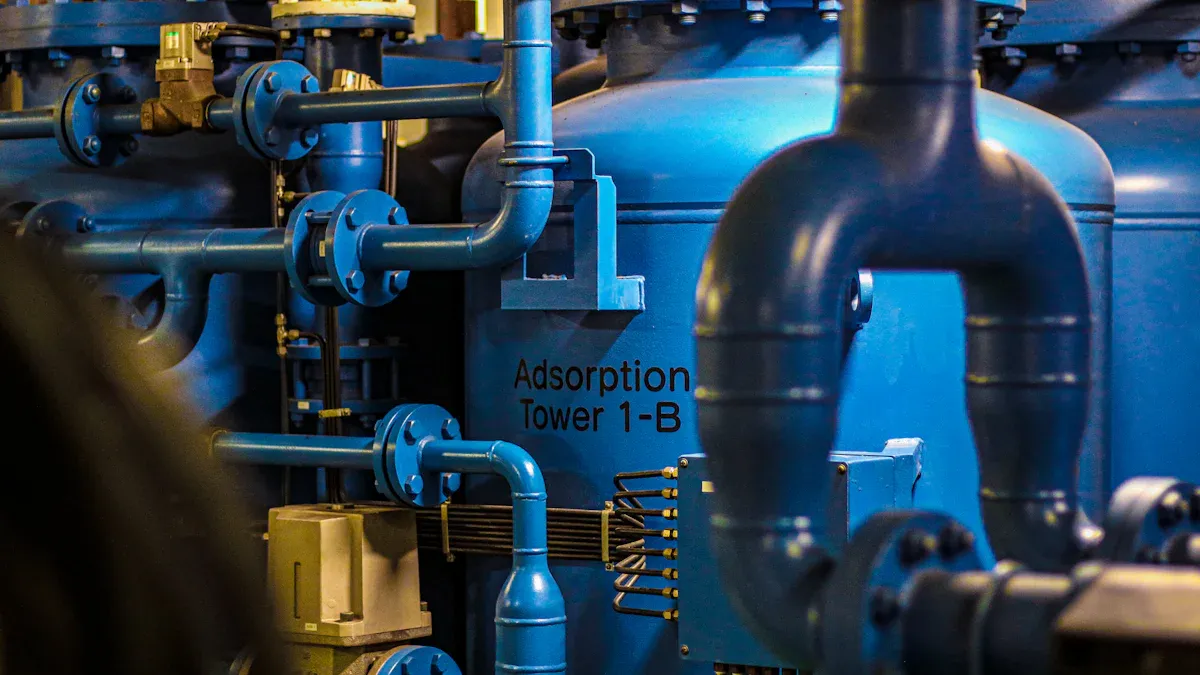
A nitrogen generation system makes nitrogen right where you need it. This means you don’t have to wait for delivery, which saves money. It uses different methods, like PSA (Pressure Swing Adsorption), to take nitrogen from the air.
How much can I save with on-site nitrogen generation?
You can save as much as 60% on nitrogen costs if you switch to making it on-site. Your savings will depend on how much you currently pay for delivery and how much nitrogen you use. Looking closely at your needs will give you a better idea.
What maintenance does a nitrogen generation system require?
Regular maintenance means checking filters, valves, and membranes. You also need to keep an eye on pressure and flow rates. Writing down maintenance details helps keep the system running well and lasting longer.
How long does it take to see ROI from a nitrogen generation system?
Usually, you can see ROI in about 6 to 18 months. How long it takes depends on how much nitrogen you need and what you currently pay. A careful cost analysis will help you guess your specific ROI.
Can I customize a nitrogen generation system for my needs?
Yes, you can change nitrogen generation systems to fit your needs. Things like purity levels, flow rates, and available space affect how it is designed. Talking to a provider will help you find the best option.