Nitrogen generator systems: how they work and their benefits

Nitrogen generator systems are very important in many industries. These systems make high-purity nitrogen gas right where it is needed. This cuts down on the need for big nitrogen deliveries. Nitrogen is used in many areas, like food packaging, chemical processing, and making electronics. The main idea behind making nitrogen uses two technologies: Pressure Swing Adsorption (PSA) and Membrane Separation. These methods help separate nitrogen from other gases in the air. By using nitrogen generator systems, you can save money, work more efficiently, and improve safety in your operations.
Key Takeaways
Nitrogen generator systems make pure nitrogen right where it is needed. This saves money and cuts down on delivery delays.
There are two main types, PSA and membrane. They separate nitrogen from air well for different industrial uses.
These systems make things safer. They lower the risks of handling heavy gas cylinders and help control nitrogen purity.
Nitrogen generators help many industries like food packaging, manufacturing, healthcare, and oil and gas.
Using nitrogen generators makes things more reliable and reduces waste. This helps businesses run better and save money.
Importance of Nitrogen
What is Nitrogen
Nitrogen is a gas that has no color or smell. It makes up about 78% of the air we breathe. This gas, called a diatomic molecule (N₂), is very stable. Its strong triple bond makes it not react easily. Because it is stable, nitrogen is important in many industries.
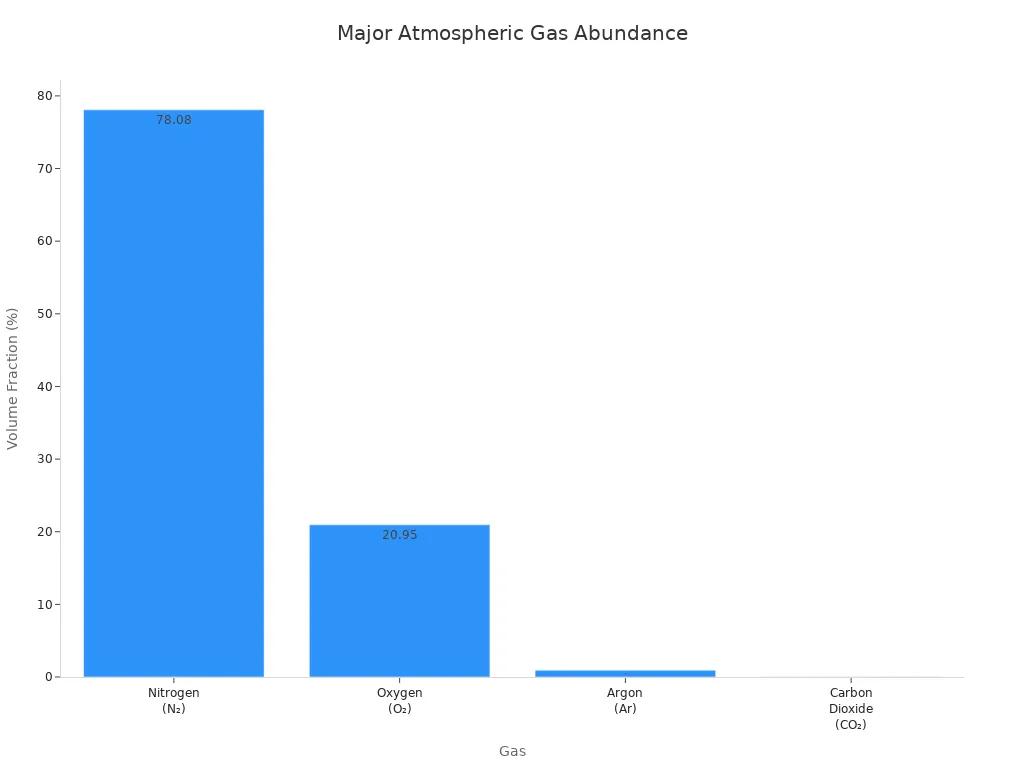
Here’s a quick look at how much nitrogen is in the air:
Gas | Volume Fraction (%) |
|---|---|
Nitrogen (N₂) | 78.08 |
Oxygen (O₂) | 20.95 |
Argon (Ar) | 0.93 |
Carbon Dioxide (CO₂) | 0.04 |
Uses of Nitrogen
You can find nitrogen in many industries because of its special qualities. Here are some main uses:
Manufacturing: Nitrogen creates safe environments in welding and electronics making. It stops oxidation and contamination, which helps make high-quality products.
Food Processing: In this area, nitrogen helps keep food fresh by pushing out oxygen. This keeps food good longer without changing its taste or feel.
Healthcare: Nitrogen is important for keeping biological materials safe. Liquid nitrogen keeps samples like blood and tissues very cold, so they stay usable.
Nitrogen's ability to not react also helps stop oxidation and bacteria from growing. This makes it very important in chemical making and medicine. By using nitrogen, you can improve safety and efficiency in your work.
How Nitrogen Generator Systems Work
Nitrogen generator systems use two main technologies: Pressure Swing Adsorption (PSA) and Membrane Technology. Each method separates nitrogen from other gases in the air. This lets you make high-purity nitrogen right where you need it.
PSA Technology
Pressure Swing Adsorption (PSA) is a common way to make nitrogen. Here’s how it works:
Feed Air Compression and Conditioning: First, you compress the air around you. Then, you dry and filter this air to remove dirt before it goes into the system.
Pressurization and Adsorption: The cleaned air goes into a container filled with Carbon Molecular Sieve (CMS). This sieve grabs oxygen, moisture, and carbon dioxide, letting nitrogen pass through as the product gas.
Desorption: When the CMS gets full of trapped gases, you lower the pressure in the container. This releases the gases, which are safely let out.
Alternating Vessels: PSA systems usually have two containers that work together. While one container grabs impurities, the other one cleans itself, so nitrogen can be made all the time.
Nitrogen Receiver: A storage container holds the nitrogen product, keeping a steady flow and purity.
This process can make nitrogen with purity levels from 95% to 99.999%. The efficiency of PSA technology makes it good for many uses, like food packaging and electronics making.
Membrane Technology
Membrane technology is another good way to create nitrogen. Here’s how this method works:
Compressed Air Treatment: You start by compressing the air around you. Then, you pre-treat it to remove things like water and dirt. This step is important to protect the membranes and help them work well.
Selective Permeability: The main part of this technology is a membrane made of hollow fibers. These fibers let gases like oxygen go through them faster than nitrogen. So, nitrogen is collected at the output while oxygen is pushed out.
Low Maintenance: Membrane nitrogen generators have fewer moving parts. This means they need less maintenance. With good care, the membranes can last 15 years or more.
Membrane technology is small and saves energy, making it a great choice for on-site nitrogen generation. It removes the need for nitrogen cylinder deliveries, giving a steady supply of nitrogen for many uses.
Both PSA and membrane technologies use the different physical properties of gases to get nitrogen efficiently. By knowing these methods, you can pick the right nitrogen generator system for your needs.
Applications of Nitrogen Generator Systems

Nitrogen generator systems are very important in many industries. They give a steady supply of nitrogen for different uses. Here are some main areas where these systems are often found:
Industrial Applications
In industry, nitrogen generators help with many processes. You can see them in:
Manufacturing: They create safe spaces for welding and making electronics. This stops oxidation and contamination.
Metal Fabrication: Nitrogen is used during laser cutting. It protects the metal and cutting tools. This leads to better products and less waste.
Oil and Gas: These systems help with well stimulation and cleaning pipelines. This keeps things safe and efficient.
Nitrogen generators make work easier by removing the need for outside suppliers. This cuts down on delivery delays and stops production from slowing down.
Medical and Laboratory Uses
In medical and lab settings, nitrogen generators keep things clean and sterile. They are very important for:
Pharmaceutical Production: Nitrogen keeps a safe atmosphere. This stops sensitive medications from breaking down.
Laboratory Applications: You can use nitrogen for packaging, gloveboxes, and testing tools. This keeps samples and results safe.
These systems offer a cost-effective, on-demand nitrogen supply. This reduces the need for cylinder deliveries. They also improve safety by lowering risks from handling heavy gas cylinders.
Food and Beverage Industry
The food and beverage industry depends on nitrogen generators for keeping products fresh and packaging. Key uses include:
Modified Atmosphere Packaging (MAP): Nitrogen takes the place of oxygen in packaging. This helps food last longer and stay fresh.
Beverage Carbonation: Nitrogen is used to add bubbles to drinks and keep their quality.
Snack Packaging: Filling bags with nitrogen protects products and pushes out oxygen.
Using nitrogen generators in food processing helps keep product quality high. It also reduces the need for artificial preservatives. This matches what consumers want for clean-label products and supports eco-friendly practices.
By knowing these uses, you can see how nitrogen generator systems improve efficiency and safety in many industries.
Benefits of Nitrogen Generator Systems
Nitrogen generator systems have many benefits that can greatly improve your work. Knowing these benefits can help you decide if you want to use these systems in your place.
Cost Efficiency
One big reason to switch to nitrogen generator systems is cost efficiency. When you make nitrogen on-site, you cut out the costs of buying and moving nitrogen cylinders. Here are some important points to think about:
Elimination of Delivery Fees: You won’t have to pay for delivery services anymore, which can add up.
Reduced Waste: Making nitrogen on-site means you only produce what you need. Traditional ways often waste about 10% because of storage problems.
Quick Return on Investment: Many companies get back their initial investment in a year or less. This happens because they save money by not using cylinders and reducing waste.
In fact, businesses say they save over $20,000 each month after switching to nitrogen generators. This big drop in costs makes nitrogen generator systems a smart financial choice.
Reliability
Reliability is another big benefit of nitrogen generator systems. These systems give a steady supply of nitrogen, so your work runs smoothly without stops. Here’s how they help with reliability:
Uninterrupted Supply: Unlike traditional methods that can have delivery delays, nitrogen generators make nitrogen when you need it. This means you won’t have downtime from supply issues.
Modular Design: Many nitrogen generator systems have a modular design. This lets you do maintenance without stopping production. This keeps a steady nitrogen supply, which is very important for industries like manufacturing and food processing.
Predictive Maintenance: Advanced digital controls and remote monitoring help keep things running. They let you find problems before they cause downtime.
With these features, nitrogen generator systems give a reliable solution that meets your needs.
Safety Improvements
Safety is very important in any work setting, and nitrogen generator systems help make the workplace safer. Here are some ways they improve safety:
Reduced Handling Risks: By making nitrogen on-site, you lower the risks of handling high-pressure cylinders or liquid nitrogen tanks. This cuts down on leaks, breaks, or accidents.
Controlled Environment: Nitrogen generators let you control nitrogen purity levels. This helps stop dangerous oxygen loss in closed spaces, which is important to avoid asphyxiation risks.
Built-in Safety Features: Many systems have alarms and monitoring tools that find gas line problems or compressor issues. These features help you fix problems before they get worse.
By using nitrogen generator systems, you not only make your work more efficient but also create a safer place for your workers.
In conclusion, nitrogen generator systems have many benefits for your work. They save money by getting rid of delivery fees and cutting down on nitrogen waste. You also get a reliable supply of nitrogen, which stops production delays. Safety gets better because you lower the risks of handling high-pressure cylinders.
Important parts like air compressors, filters, and smart control systems help these systems work better and last longer. By using nitrogen generator systems, you can manage your nitrogen supply better and save a lot of money. Think about switching to improve how well you operate today!
FAQ
What is the main advantage of using a nitrogen generator system?
The biggest benefit is saving money. You cut out delivery fees and make nitrogen on-site. This means you can save a lot each month for your business.
How does a nitrogen generator improve safety?
A nitrogen generator lowers risks from handling heavy cylinders. It also keeps environments controlled, which helps reduce asphyxiation risks in tight spaces.
Can I customize the nitrogen purity level?
Yes, you can change nitrogen purity levels to fit your needs. Both PSA and membrane methods let you reach purities from 95% to 99.999%.
How much maintenance do nitrogen generators require?
Nitrogen generators need very little maintenance. Regular checks on filters and compressors keep them working well. Membrane systems can last over 15 years with good care.
Are nitrogen generators suitable for small businesses?
Definitely! Nitrogen generators are great for small businesses. They give a steady nitrogen supply without needing big storage tanks or frequent deliveries.