The Role of Nitrogen in Industrial Processes: Key Benefits and Uses


Nitrogen is very important in many industrial processes, and one might wonder, what is a use for nitrogen? Its ability to do different things makes it necessary for many applications. These include food preservation, electronics manufacturing, and healthcare. You can find nitrogen in important areas like:
Chemical Industry: Expected market size over USD 32.31 Billion by 2032.
Healthcare: Helping pharmaceuticals grow at 6.24% from 2026 to 2032.
Food and Beverage Sector: Keeping food safe with good packaging.
These benefits illustrate why nitrogen is a valuable resource in your industry.
Key Takeaways
Nitrogen is important for keeping food fresh. It takes the place of oxygen in packaging. This slows down spoilage and makes food last longer.
In electronics, nitrogen makes a safe, non-reactive space. This protects delicate parts from rust and helps cool them during production.
Nitrogen is very important in healthcare. It is used in cryopreservation to keep biological samples safe at cold temperatures.
Using nitrogen in chemical processes makes things safer. It lowers fire risks and controls unwanted reactions. This creates a safer workplace.
Nitrogen is useful and not too expensive. It is a valuable resource in many industries, like food, healthcare, and electronics.
Nitrogen in Food

Preservation Techniques
Nitrogen is very important for keeping food fresh. It helps stop food from going bad. You might not know this, but nitrogen is a gas that does not react with other things. It pushes out oxygen in food packages. This is key because oxygen helps bacteria and mold grow, which causes spoilage. By using nitrogen instead of oxygen, you can slow down the spoiling of fats and oils. This helps food last longer.
Here are some main benefits of using nitrogen for food preservation:
Makes perishable products last longer
Keeps food quality and nutrients intact
Cuts down on spoilage and waste
Lets you store food for a longer time
Modified Atmosphere Packaging
Modified atmosphere packaging (MAP) is a method that uses nitrogen to help preserve food. In this method, nitrogen replaces oxygen. This slows down how fruits and vegetables breathe. It keeps them fresh for a longer time. For meat and dairy, less oxygen stops harmful bacteria from growing, which cuts spoilage.
A study looked at how nitrogen and argon worked in MAP for chicken breast fillets. It found no big differences in bacteria growth between the two gases. But, tests showed some color differences. This means nitrogen works well, but it is similar to argon in some cases. More studies are needed to compare nitrogen with other gases directly.
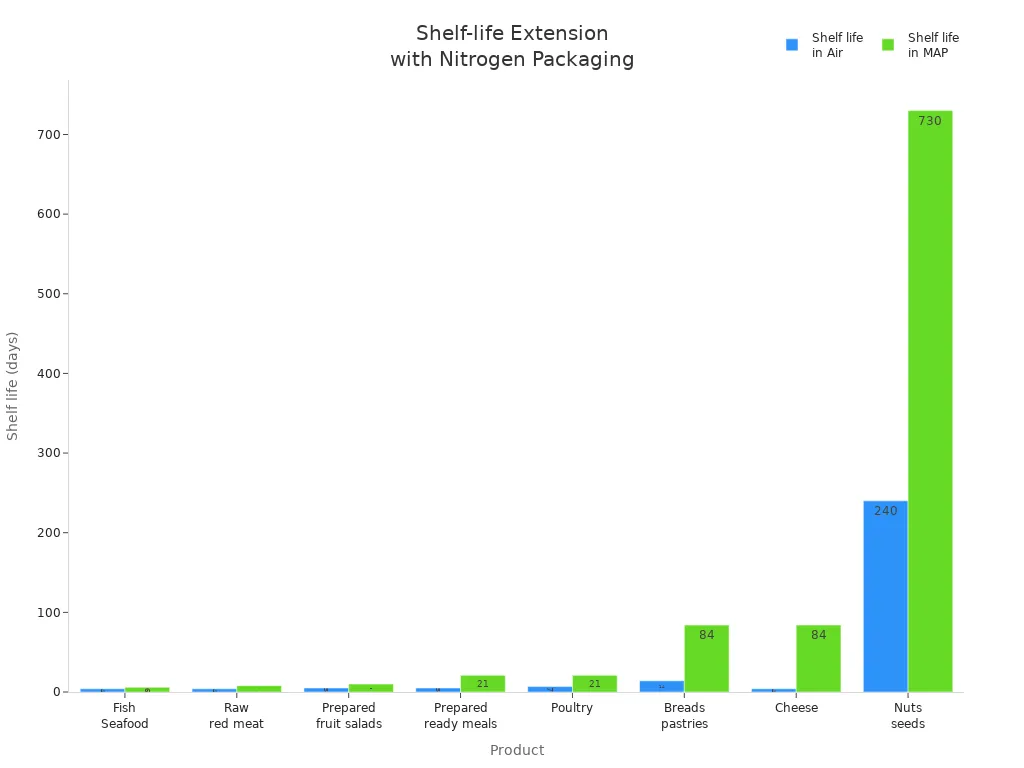
The average time food lasts longer with nitrogen packaging is impressive. Here’s a table showing how shelf life changes for different products when using nitrogen in MAP compared to air:
Product | Shelf life in Air | Shelf life in MAP |
|---|---|---|
Fish and Seafood | Up to 4 days | Up to 6 days |
Raw red meat | Up to 4 days | Up to 8 days |
Prepared fruit and salads | Up to 5 days | Up to 10 days |
Prepared ready meals | Up to 5 days | Up to 21 days |
Poultry | Up to 7 days | Up to 21 days |
Breads & pastries | Up to 14 days | Up to 12 weeks |
Cheese | Up to 4 days | Up to 12 weeks |
Nuts and seeds | Up to 8 months | Up to 2 years |
Using nitrogen in modified atmosphere packaging not only makes food last longer but also makes it look better. You can enjoy fresher food for a longer time, which helps cut down on waste and improves your food experience.
Nitrogen in Electronics
Inert Atmosphere
Nitrogen is very important in electronics. It creates an inert atmosphere. This environment protects sensitive electronic parts from oxidation. When you use nitrogen cabinets, they add high-purity nitrogen. This lowers the oxygen level to below 1%. This big drop in oxygen stops chemical reactions that could harm your parts. By keeping humidity low and removing oxygen, nitrogen helps keep your electronics safe during making and storing.
Cooling Applications
Nitrogen is also key for cooling in the electronics industry. Here are some main ways nitrogen helps with cooling:
Liquid nitrogen is a fast and effective way to shield and test electronic parts and circuit boards.
In electronics making, nitrogen cooling keeps the temperature just right. This stops heat damage to sensitive parts.
The table below shows the most common cooling uses for nitrogen in electronics making:
Function | Description |
|---|---|
Displacement of oxygen | Stops oxidation during soldering by replacing oxygen in the reflow oven. |
Enhances solder joint quality | Cuts down on voids and dross, improving solder joint strength. |
Improves wettability | Reduces solder paste use, making material usage better. |
Aids in thermal management | Helps control heat during soldering, ensuring good conditions for part quality. |
By using nitrogen this way, you can improve the reliability and performance of electronic devices. The inert atmosphere and good cooling from nitrogen are very important for keeping your electronic parts safe throughout their life.
Nitrogen in Healthcare
Cryopreservation
Nitrogen is very important in healthcare, especially in cryopreservation. This process uses very low temperatures to keep biological samples safe. You can find nitrogen in cryogenic storage systems. It helps keep cells, tissues, and organs alive for research and medical use. Here are some main uses of nitrogen in cryopreservation:
Biological Sample Preservation: Keeps samples safe for long-term storage.
Cryotherapy: Freezes and destroys bad cells with little harm to nearby tissues.
Description | |
|---|---|
Cryogenic Preservation | Used to keep biological samples and for cryogenic treatments, keeping very low temperatures for long-term storage. |
Surgical Procedures | Used in cryotherapy to freeze and destroy bad cells, reducing damage to healthy tissue. |
Pharmaceutical Production | Keeps sterile conditions and protects the quality of medicines during making. |
Sterilization Processes
Nitrogen also helps a lot in sterilization in medical places. One good method uses nitrogen dioxide (NO2) to sterilize medical tools and therapeutic biomolecules. This gas reacts with proteins, causing fewer unwanted reactions than other methods. Here are some key points about nitrogen's role in sterilization:
Effective Sterilization: NO2 sterilizes without leaving any residues.
Compatibility: Works well with many materials and works at normal temperatures.
Using nitrogen in these processes makes sure that medical tools stay safe and work well for patient care. By keeping sterile conditions, nitrogen helps stop infections and improves the overall quality of healthcare services.
Nitrogen in Chemical Processing

Safety Enhancements
Nitrogen is very important for safety in chemical processing. It helps lower fire and explosion risks. By pushing out oxygen, nitrogen reduces the chance of fires. This is especially important where flammable materials are used.
Here are some safety improvements when using nitrogen:
Safety Improvement | Description |
|---|---|
Nitrogen pushes out oxygen, greatly lowering fire and explosion risks in chemical processes. | |
Addressing Asphyxiation Risks | Even though nitrogen is safe, it can cause breathing problems if not handled correctly. |
Good Safety Practices | Following the right steps helps reduce risks when using nitrogen in factories. |
You can see how nitrogen makes explosive places safer. It creates a better environment for workers and machines.
Reaction Control
Nitrogen is also key for controlling reactions in chemical making. It helps stop unwanted reactions and keeps things clean. Here are some ways nitrogen is used for reaction control:
Nitrogen takes the place of reactive oxygen in chemical plants, reducing fire risks.
It cleans pipelines and removes oxygen in chemical tools to stop explosions.
The oil and gas industries use nitrogen for safety and reaction control.
By using nitrogen, you can make chemical factories safer. It lowers oxygen levels, which helps prevent fires and explosions. This makes nitrogen very important for safety and efficiency in chemical processing.
What is a Use for Nitrogen in Oil and Gas?
Production Stimulation
Nitrogen is very important for helping production, especially in hard-to-reach areas. You can use liquid nitrogen (LN2) to help get more oil. This method creates tiny cracks in the rock. These cracks let oil flow out easier. Here are some benefits of using nitrogen for production stimulation:
Benefit | Description |
|---|---|
Induced Micro-cracks | LN2 cooling creates tiny cracks that are up to 40 µm wide. |
Increased Surface Roughness | The surface roughness goes up from 350 to 942 nm after treatment. |
Enhanced Porosity and Permeability | With the right LN2 exposure (90 min), porosity and permeability more than doubled. |
Improved Hydrocarbon Recovery | LN2 treatment helps fluids flow better and improves oil recovery in tight gas areas. |
Using nitrogen for production stimulation not only helps get more oil but also is good for the environment. The temperature of LN2 is very low at −195.8 °C, which helps with cryogenic effects. You will see better porosity and permeability with longer LN2 treatment times.
Process Applications
Nitrogen has many important uses in the oil and gas industry. Here are some key applications:
Pipeline drying: Nitrogen removes dirt and dries pipelines after tests.
Nitrogen purging: This process removes dangerous gases to stop chemical reactions and lower oxygen levels.
Pressure testing: You can use nitrogen for testing safety equipment with air pressure.
Nitrogen blanketing: This method stops dangerous reactions in storage tanks by removing oxygen.
Enhanced Oil Recovery (EOR): Nitrogen injection helps keep or boost production by putting nitrogen into empty reservoirs.
These applications show how nitrogen makes oil and gas work safer and better. By using nitrogen generators instead of regular cylinders, companies can lower their carbon footprint. This change not only cuts emissions from delivery trucks but also reduces waste from cylinder disposal, making operations more sustainable.
In conclusion, nitrogen is very important in many industries. Its benefits are:
Inert Nature: Nitrogen helps create safe places because it does not react.
Cost-Effectiveness: It is easy to find and cheap to make, so it can be used in many ways.
Versatility: Nitrogen has many uses, from keeping food fresh to making electronics.
When you think about using nitrogen solutions, remember that on-site nitrogen generation systems can improve safety and efficiency. These systems lower the need for heavy cylinder handling and have safety features like leak detection. With the nitrogen market expected to grow by 4.56% each year from 2025 to 2035, now is a great time to see how nitrogen can help your work.
FAQ
What are the main uses of nitrogen in industry?
Nitrogen is very important in food preservation, electronics making, healthcare, chemical processing, and oil and gas. It does not react easily, which helps stop oxidation, makes things safer, and improves product quality in these areas.
How does nitrogen improve food preservation?
Nitrogen takes the place of oxygen in packaging. This slows down spoilage and makes food last longer. It helps keep food quality, cuts down on waste, and keeps nutrients safe, which is very important for the food industry.
Why is nitrogen important in electronics?
Nitrogen creates a safe atmosphere that protects sensitive parts from oxidation. It also helps cool things during making, ensuring the best conditions for electronic devices and making them more reliable.
How does nitrogen contribute to healthcare?
In healthcare, nitrogen is key for cryopreservation. It keeps biological samples safe at very low temperatures. It also helps with sterilization, making sure medical tools are safe and work well for patient care.
What safety benefits does nitrogen provide in chemical processing?
Nitrogen makes things safer by pushing out oxygen, which lowers fire and explosion risks. It also helps control reactions, stopping unwanted chemical interactions and keeping a safer working environment in chemical plants.