The technology behind oxygen nitrogen gas plants

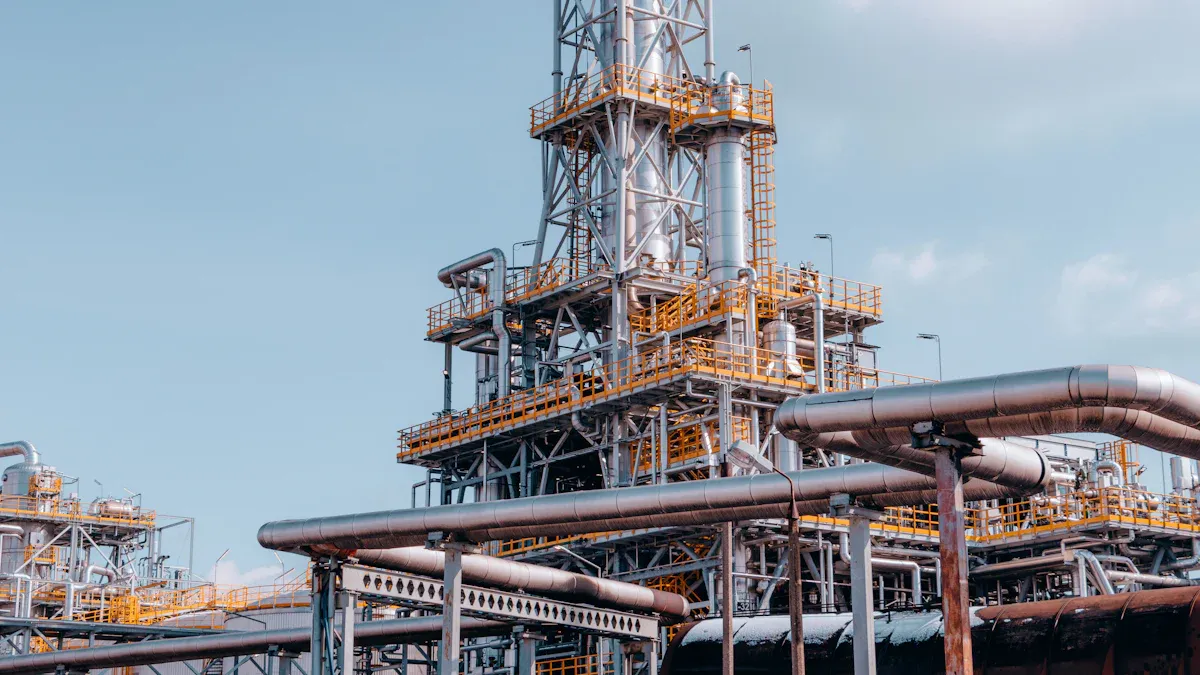
Oxygen nitrogen gas plants are very important today. They change air into necessary gases for many industries. The market for these plants is growing fast. The Asia Pacific area makes the most money from this. In 2023, the nitrogen gas market was worth about USD 30.4 billion. It is expected to reach USD 44.28 billion by 2030. This growth shows more demand in areas like healthcare, manufacturing, and electronics. Learning about the technology of these plants shows how important they are for modern uses.
Key Takeaways
Oxygen nitrogen gas plants change air into pure gases. Many industries need these gases, like healthcare and manufacturing.
High purity of oxygen and nitrogen is very important. It helps with safety, product quality, and smooth industrial processes.
There are two main technologies that separate gases. Cryogenic distillation is for very high purity. Pressure swing adsorption is for moderate purity.
Compressors, heat exchangers, adsorption beds, and distillation columns all work together. They help produce and purify gases efficiently.
Oxygen and nitrogen are very important in healthcare, food preservation, steel making, and electronics. The demand for these gases is growing worldwide.
Operation of Gas Plants
Air as Feedstock
Air is the main feedstock for oxygen nitrogen gas plants. The air we breathe has about 78% nitrogen and 21% oxygen. This mix gives industries the gases they need. When air comes in, the plant separates these important parts.
The process starts with air intake. Here, outside air enters the system. You compress this air to make it more pressurized. This step is important for the next separation steps. Then, the compressed air cools down. It often uses the Joule-Thomson effect to lower its temperature for purification. This purification step takes out impurities like moisture and carbon dioxide. This makes sure the gases produced are of good quality.
Importance of Purity
Gas purity is very important for many industrial uses. Different industries need specific purity levels for oxygen and nitrogen gases. For example, general industrial uses usually need oxygen purity between 90% and 95%. But industries like healthcare and pharmaceuticals need much higher purity, often over 99.5%. This keeps products safe and reliable.
To show the different purity needs, look at this table:
Industrial Application Examples | Purity Range | |
|---|---|---|
Ultra-High Purity (UHP) | Semiconductor manufacturing, electronics, research | 99.999%+ |
High Purity | Laser cutting, heat treating, pharmaceutical | 99.9% to 99.999% |
Food Grade | Food packaging, winemaking, food processing | 99% to 99.9% |
Medical Grade | Cryopreservation, cryotherapy, medical imaging | 99%+ |
Industrial Grade | Tire inflation, chemical blanketing | 95% to 99% |
Keeping high purity levels is very important for several reasons:
Product Quality: High purity gases stop contamination that could harm final products, especially in pharmaceuticals and electronics.
Safety: Reducing harmful impurities lowers health risks and stops dangerous reactions in sensitive areas.
Equipment Protection: Impurities can cause damage and blockages, leading to costly downtime.
Process Optimization: High purity gases help make industrial processes efficient and precise, stopping unwanted reactions.
In semiconductor manufacturing, even tiny contaminants can cause defects and reliability problems. So, keeping gas purity is key to avoiding performance issues. Advanced monitoring technologies help find impurities early, ensuring safety and compliance in sensitive processes.
Separation Technologies
Separation technologies are very important for oxygen nitrogen gas plants. There are two main methods used: cryogenic distillation and pressure swing adsorption (PSA). Each method has its own benefits and uses.
Cryogenic Distillation
Cryogenic distillation is a very effective way to separate oxygen and nitrogen from air. This process cools compressed air to very low temperatures, which turns it into a liquid. Once it is a liquid, you can separate the gases based on their boiling points in special columns.
Here’s how it works:
Air Compression: First, you compress the air to increase its pressure.
Cooling: Next, the compressed air cools down using heat exchangers and refrigeration. This cooling brings the air to cryogenic temperatures, usually below -183°C.
Purification: Before cooling, you need to remove impurities like water vapor and carbon dioxide. Molecular sieves help with this step to stop freezing and clogging.
Separation: In the distillation columns, different gases separate because of their boiling points. Nitrogen, which has the lowest boiling point at -195.8°C, vaporizes first and collects at the top. Oxygen and argon stay liquid and are collected lower down.
This method can achieve high purity levels, often over 99.5% for oxygen and nitrogen. The efficiency of cryogenic distillation helps gas plants produce large amounts of high-purity gases. For example, the AMC plant in Oklahoma makes argon at 99.999% purity with recovery rates over 97%.
Gas | Typical Purity Achieved | Recovery Rate Range |
|---|---|---|
Argon | 99.999% | > 90% to > 97% |
Nitrogen | High purity | Not specified |
Oxygen | ≥99.5% | Not specified |
Pressure Swing Adsorption (PSA)
Pressure swing adsorption (PSA) is another good technology for making oxygen. This method uses zeolite molecular sieves to separate nitrogen from air, letting oxygen pass through. Here’s how PSA works:
Air Compression: You put compressed air into a vessel filled with zeolite at pressures between 4-8 bar(g).
Adsorption: The zeolite adsorbs nitrogen, allowing oxygen to flow through as the product gas.
Regeneration: While one vessel adsorbs nitrogen, another vessel depressurizes to release the nitrogen and regenerate the zeolite.
Continuous Cycle: This process switches between pressurization and depressurization, allowing for continuous oxygen production.
PSA usually produces oxygen with a purity level between 90-95%. This method is especially useful for smaller operations because it costs less and is easier to use. However, it cannot reach the ultra-high purity levels that cryogenic distillation can.
Comparison Aspect | PSA (Pressure Swing Adsorption) | Cryogenic Distillation (Air Separation) |
|---|---|---|
Oxygen Purity | High purity (≥99.5%), suitable for applications requiring ultra-high purity | |
Production Capacity | Small to medium scale (10-500 Nm³/h), modular and flexible | Large scale (≥500 Nm³/h), suitable for tonnage scale production |
Initial Investment | Lower capital cost, simpler technology, skid-mounted modules | High capital cost, complex infrastructure, longer installation |
Machinery in Oxygen Nitrogen Gas Plant
Compressors and Heat Exchangers
Compressors are very important in oxygen nitrogen gas plants. They raise the air pressure, making it easier to separate gases. You can find different types of compressors in these plants, such as:
Piston (reciprocating) compressors
Diaphragm compressors
Helical screw compressors
Centrifugal compressors
Each type works differently and has its own uses. For example, piston compressors are good for high-pressure jobs. They can be oil-lubricated or oil-free. Oil-free designs are better for high purity gas needs.
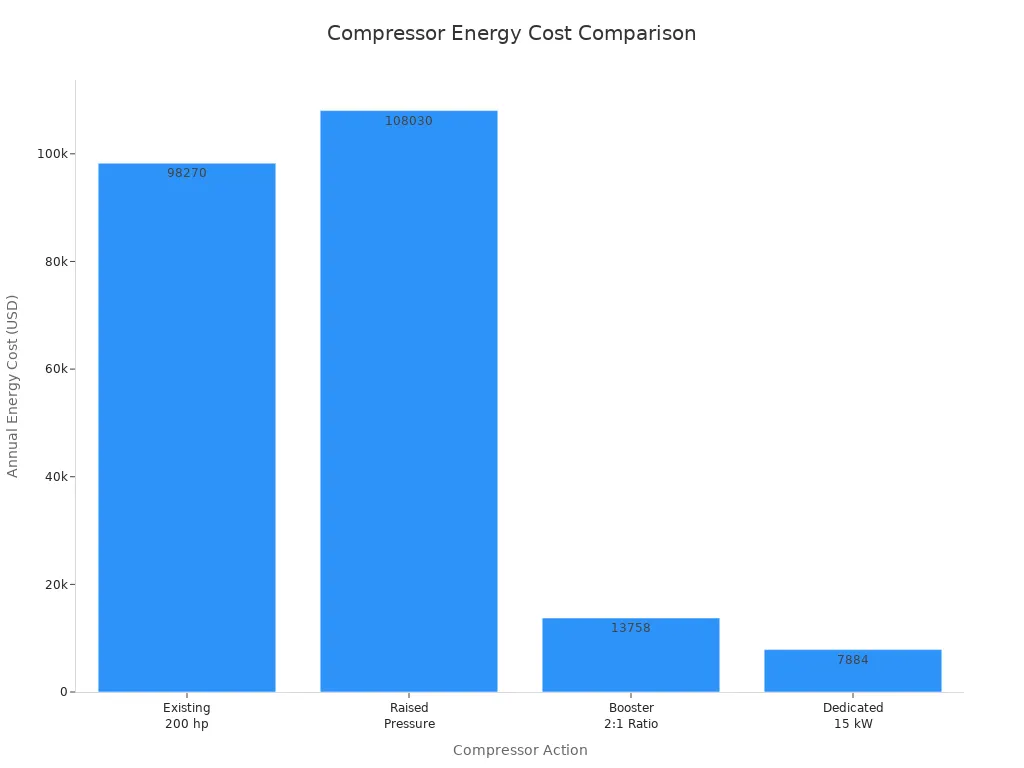
Heat exchangers also help save energy and improve processes. They take heat from industrial work and let you reuse it. This cuts down on energy use and lowers costs. In gas plants, heat exchangers keep product quality by controlling temperatures well. They also stop corrosion and protect equipment, making operations safer.
Tip: Using plate-fin heat exchangers can save more energy. Their design increases surface area, which helps heat transfer work better.
Adsorption Beds and Distillation Columns
Adsorption beds are key for cleaning gases in oxygen nitrogen gas plants. They have molecular sieves, like Zeolite or Carbon Molecular Sieve (CMS). Here’s how they work:
You pre-treat compressed air to get rid of moisture and oil.
The air goes into the adsorption beds filled with molecular sieves.
The sieves grab one gas component, letting the other pass through as clean output.
When full, the bed pressure drops to release the grabbed gas.
Two beds work back and forth to keep purification going.
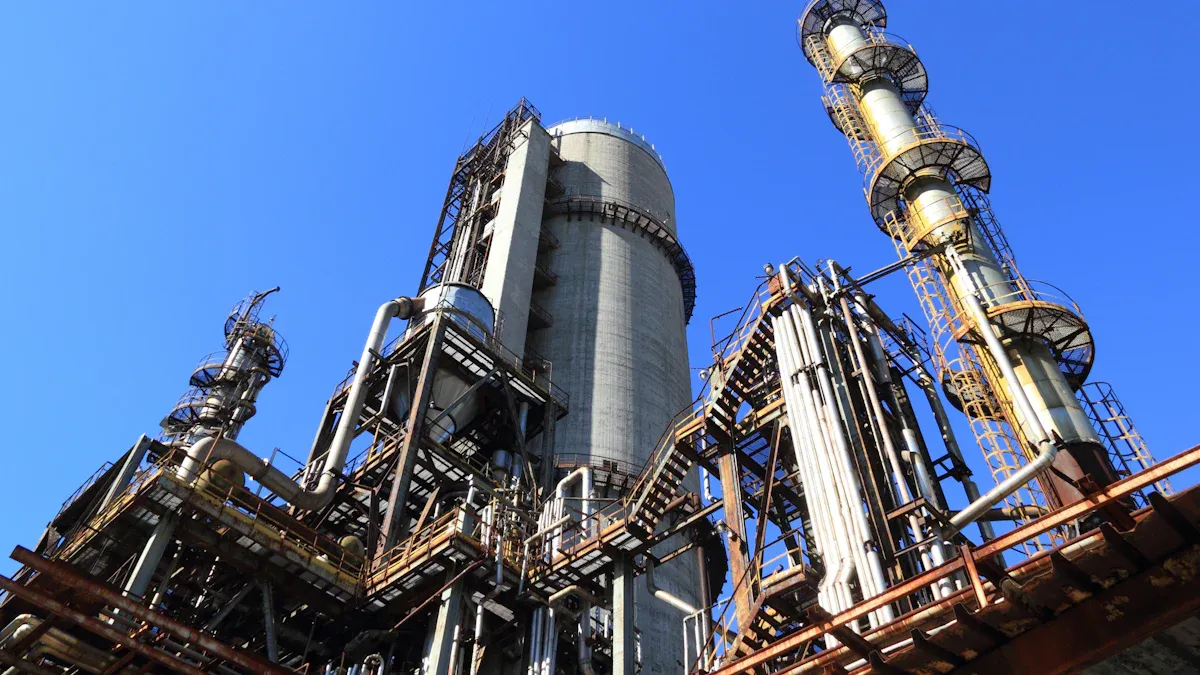
Distillation columns help separate gases efficiently in production. They can face problems like fouling and pressure drops, which lower efficiency. Advanced internals, like high-performance packings, improve mass transfer and boost capacity. Using materials that resist corrosion helps keep the column strong in tough conditions.
By using these technologies together, you can improve how an oxygen nitrogen gas plant works, ensuring high purity and efficiency in gas production.
Applications of Produced Gases
Healthcare Applications
Oxygen and nitrogen are very important in healthcare. You can find oxygen in many medical uses, especially for breathing help. Hospitals use high-purity medical oxygen for patients who have trouble breathing. This oxygen must be very pure, often over 99%, to keep patients safe and healthy. During the COVID-19 pandemic, the need for medical oxygen increased a lot. This showed how important it is for treating breathing problems. Many hospitals ran low on oxygen, which showed the need for dependable oxygen supply systems.
Nitrogen also has important uses in healthcare. It is used in cryopreservation, which keeps biological samples at very low temperatures. This process is crucial for keeping cells and tissues safe for research and medical use. Nitrogen is also found in anesthetic gases, like nitrous oxide, which helps relieve pain during medical procedures.
Industrial Uses
Both gases are needed in many industrial processes. Oxygen is used a lot in steel making. It helps burn better and removes impurities from molten iron. This makes steel production more efficient and improves its quality. You can also find oxygen in welding and cutting, where it helps make clean and precise cuts.
Nitrogen has many uses in different industries. It is often used in food preservation. It replaces oxygen to help keep perishable foods fresh longer. This method, called modified atmosphere packaging, helps stop spoilage and keeps food quality. In electronics manufacturing, nitrogen creates safe environments that stop oxidation during soldering.
Here’s a quick overview of some key applications:
Oxygen:
Medical oxygen therapy
Steel production
Welding and cutting
Nitrogen:
Food preservation
Electronics manufacturing
Inerting volatile environments
New uses for both gases are also growing. For example, new renewable energy technologies use oxygen in fuel cells and energy storage systems. Nitrogen helps create stable environments for these technologies, making them work better and last longer.
In conclusion, knowing how oxygen nitrogen gas plants work is very important. It helps you see their role in different industries. Air is the main feedstock, and gas purity is very important too. As the market grows, you will face challenges like changing raw material prices and not having enough skilled workers. But there are also many chances in new markets and new technologies.
Tip: Keeping up with new ideas and rules will help you manage this changing field well.
By accepting these changes, you can help create a better and more efficient future in gas production.
FAQ
What is the main function of an oxygen nitrogen gas plant?
Oxygen nitrogen gas plants change air into pure oxygen and nitrogen. They use special technologies to separate these gases for different industrial and medical uses.
How does cryogenic distillation work?
Cryogenic distillation cools compressed air to very low temperatures. This process turns air into a liquid. It allows separation based on boiling points in special columns.
What are the benefits of high-purity gases?
High-purity gases make sure products are good quality. They also improve safety, protect equipment, and help industrial processes work better. They stop contamination and make operations more efficient.
Why is nitrogen used in food preservation?
Nitrogen takes the place of oxygen in food packaging. This process slows down spoilage and keeps food fresh by creating a modified atmosphere that stops oxidation.
What industries rely on oxygen and nitrogen?
Industries like healthcare, manufacturing, electronics, and food processing depend on oxygen and nitrogen. These gases are very important for many uses, from medical treatments to making steel.