Top Tips for Enhancing Efficiency with Nitrogen Generation Systems

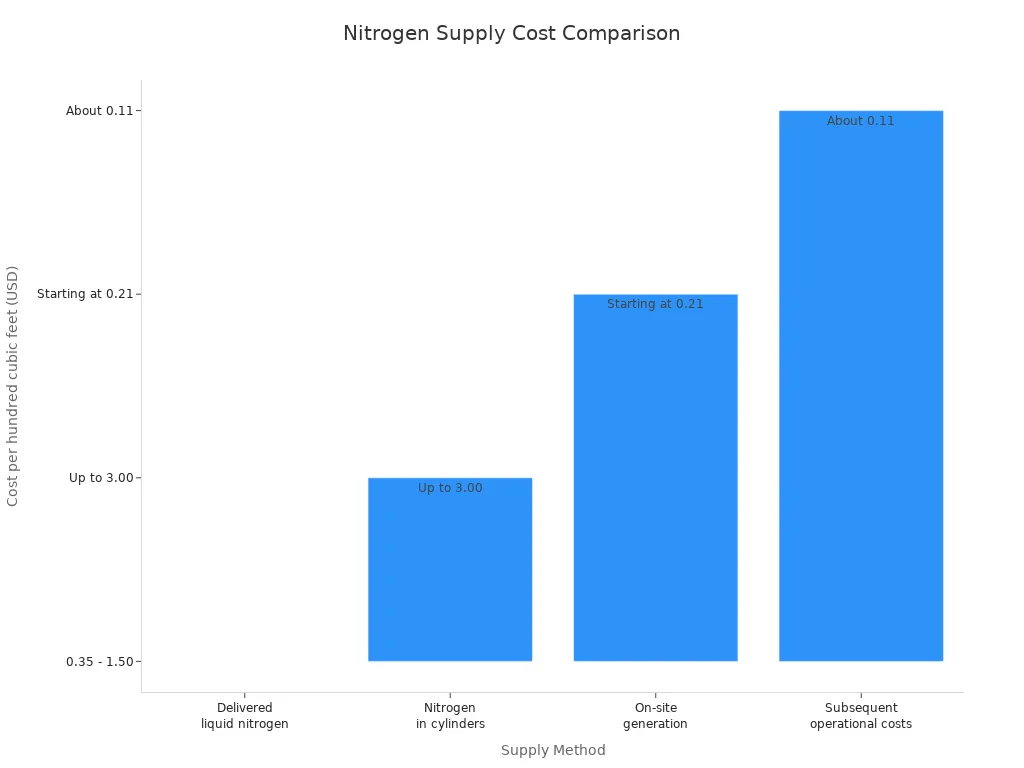
On-site nitrogen generation systems are very important for improving efficiency. They make nitrogen right where you need it. This can help you save a lot of money. Companies that use these systems often save between 50% and 90%. For example, a manufacturing company saved about $25,000 each year after switching. The cost of making nitrogen on-site usually costs $0.08 to $0.14 for 100 CF. In contrast, traditional methods can cost over $3.00. Using this technology helps your profits and increases your return on investment.
Key Takeaways
Making nitrogen on-site can help companies save 50% to 90% on costs. This leads to big savings each year.
Having a steady nitrogen supply from on-site systems means less downtime. It also means companies do not rely on outside vendors.
Regular maintenance is important. This includes checking systems and changing filters. It helps keep nitrogen generation systems working well for a long time.
Using monitoring tools, like temperature sensors, helps keep nitrogen pure. It also helps find problems early.
Upgrading important parts, like air compressors and filters, can make systems work better. This can also lower costs to run them.
Nitrogen Generation Systems Overview
Nitrogen generation systems are very important in many industries. They make nitrogen right where you need it. This means you do not have to rely on outside suppliers. You get a steady supply of nitrogen that fits your needs.
Types of Nitrogen Generation Technologies
There are different types of nitrogen generation technologies. Each one has special features:
Pressure Swing Adsorption (PSA): This method uses a carbon sieve to soak up oxygen. It lets high-purity nitrogen go through. PSA systems can reach purity levels of up to 99.9995%.
Membrane Nitrogen Generators: These systems use a membrane filter to separate nitrogen from other gases. They work well for lower purity needs, usually between 95% and 99.5%.
Technology Type | Description | Purity Level |
|---|---|---|
PSA (Pressure Swing Adsorption) | Uses a carbon molecular sieve to absorb oxygen, allowing high-purity nitrogen to pass through. | Up to 99.9995% |
Membrane nitrogen generator | Separates nitrogen from other gases using a membrane filter, suitable for lower purities. | 95% to 99.5% |
Benefits of On-Site Production
Making nitrogen on-site has many benefits for your work:
Supply Reliability: You can trust a steady nitrogen supply. This cuts down on downtime and stops you from needing outside vendors.
Safety: Making nitrogen on-site lowers risks from handling high-pressure gas tanks. This makes the workplace safer.
Cost Efficiency: This method removes delivery fees and other costs. This leads to quick savings.
Environmental Impact: On-site systems help lower your carbon footprint. They cut down on transportation emissions and use a renewable resource.
Operational Flexibility: You can adjust nitrogen purity and flow rates to fit your production needs.
By using nitrogen generation systems, you boost your efficiency while saving money and improving safety.
Factors Influencing Efficiency
How well nitrogen generation systems work depends on some important factors. Knowing these factors can help you improve your operations and save money.
Purity Levels and Their Impact
Purity levels greatly affect how well nitrogen generation systems work and how much they cost. Different uses need different levels of nitrogen purity. For example, food packaging usually needs about 99% purity. On the other hand, semiconductor manufacturing might need purities as high as 99.999%.
Purity Level | SCFM of Compressed Air Required | Energy Consumption Ratio |
|---|---|---|
95% | 2 SCFM | 1 |
99.999% | 12 SCFM | 6 |
Higher purity levels need more compressed air and energy. This can raise operational costs. For instance, working at 99.999% purity uses much more energy than working at 95% purity. So, you should check your specific nitrogen purity needs based on what you are making. This check can help you avoid extra costs while still meeting production needs.
Energy Consumption Considerations
Energy use is very important for how well nitrogen generation systems work. Efficient systems lower operational costs and reduce environmental harm. The energy cost changes with nitrogen purity levels, as shown in the table below:
Nitrogen Purity | Energy Cost (per m3) |
|---|---|
95% | €0.024 |
99.5% | €0.030 |
99.99% | €0.050 |
99.999% | €0.093 |
As you can see, higher purity levels mean higher energy costs. To improve energy use, think about these tips:
Check production capacity and flow rate to match daily needs and peak times.
Look at specific nitrogen purity needs based on what you are making.
Think about energy efficiency and operational costs for long-term savings and sustainability.
By focusing on these areas, you can make your nitrogen generation systems work better.
System Sizing and Design
Getting the right size and design for your system is key to making nitrogen generation systems work well. A good system meets your facility's needs, helping to prevent downtime and delays. Here are some important points to think about:
Place nitrogen generators near important utilities like compressed air and electricity. This closeness helps them work better, especially for PSA systems that need clean, dry air.
Talk to experts to find the best setup, including nitrogen purity, flow rate, and application needs.
A well-designed air compressor system is important for providing a steady and high-quality air supply. This setup boosts performance and cuts down on energy use.
By making sure your nitrogen generation systems are the right size and design, you can cut out extra costs from delivered nitrogen and keep operations running smoothly.
Enhancing Efficiency with Nitrogen Generation Systems
To make your nitrogen generation systems work better, you need to do regular maintenance, monitor them well, and think about upgrading parts. Each of these steps is important for keeping your equipment running well and lasting longer.
Regular Maintenance Practices
Regular maintenance is key to keeping your nitrogen generation systems working well. Here are some important things to do:
Conduct Inspections: Plan regular inspections to find and fix problems quickly. This helps your nitrogen generators last longer.
Follow Maintenance Intervals: Stick to the suggested maintenance schedule for important parts. For instance, change carbon filters once a year and check coalescing filters every six months.
Component | Recommended Interval |
|---|---|
Carbon Filters | Once a year |
Coalescing Filters | Every six months |
Particulate Filters | Every three months |
Document Maintenance Activities: Keep a record of all maintenance work. This helps you track how well things are working and spot any ongoing problems.
By following these steps, you can cut down on frequent replacements and protect your equipment investment. Regular maintenance boosts the efficiency of nitrogen generators and keeps them running reliably over time.
Effective Monitoring Techniques
Monitoring your nitrogen generation systems is very important for spotting problems. Here are some good techniques to use:
PSA Unit Stability Monitoring: Use temperature sensors to get real-time feedback. This helps improve nitrogen purity.
Output Line Quality Assurance: Use dew point transmitters to make sure only dry nitrogen goes to your production area. This stops humidity problems that can hurt product quality.
End-Use Environmental Control: Check temperature and humidity in production areas. This keeps you in line with environmental rules and helps maintain product quality.
Monitoring Technique | Description |
|---|---|
PSA Unit Stability Monitoring | Uses temperature sensors to give real-time feedback, helping to improve nitrogen purity. |
Output Line Quality Assurance | Uses dew point transmitters to ensure only dry nitrogen reaches the customer, avoiding humidity issues. |
End-Use Environmental Control | Involves checking temperature and humidity in production areas to keep environmental standards and product quality. |
These monitoring techniques help you find problems early, allowing you to fix them quickly and improve overall system performance.
Upgrading System Components
Upgrading certain parts of your nitrogen generation systems can really boost efficiency. Think about these upgrades:
Air Compressor: This part is key for keeping pressure for good nitrogen production. Regularly check for warning lights to avoid problems.
Filtration System: Upgrading this system removes dirt from compressed air, making sure nitrogen is pure. Good maintenance stops clogs and leaks.
Air Dryer: A good air dryer takes moisture out of compressed air, stopping rust. Regularly empty the oil-water separator to prevent water build-up.
Nitrogen Generator: Make sure your nitrogen generator separates nitrogen from oxygen well. Follow the manufacturer’s maintenance tips for the best performance.
Component | Role in Efficiency | Maintenance Importance |
|---|---|---|
Air Compressor | Key for keeping pressure for good nitrogen production. | Regular checks for warning lights to avoid problems. |
Filtration System | Removes dirt from compressed air, ensuring nitrogen is pure. | Needs maintenance to stop clogs and leaks. |
Air Dryer | Takes moisture out of compressed air to stop rust. | Regularly empty the oil-water separator to avoid water build-up. |
Nitrogen Generator | Separates nitrogen from oxygen, making high-purity nitrogen. | Follow manufacturer’s maintenance tips to keep it working well. |
By upgrading these parts, you can improve the efficiency of your nitrogen generation systems and lower operational costs.
On-site nitrogen generation systems are very important for improving efficiency and cutting costs. By making nitrogen on-site, you can save between 40% to 80% on your nitrogen bills. The money you spend at first usually pays off within 6 to 18 months.
Think about these main benefits:
Cost Savings: On-site generation can bring costs down to about $0.21 per hundred cubic feet.
Supply Reliability: You won’t have production stops because of gas shortages.
Environmental Impact: Cutting down on transportation helps lower your carbon footprint.
Use the tips in this blog to make your system work better. The long-term benefits of on-site nitrogen generation systems can really improve your operations and profits.
FAQ
What is a nitrogen generation system?
A nitrogen generation system makes nitrogen right where you need it. This means you do not have to depend on outside suppliers. You get a steady supply that fits your needs.
How does purity level affect costs?
Higher purity levels need more energy and compressed air. This raises your operational costs. Check your specific purity needs to avoid extra expenses.
What maintenance is required for these systems?
Regular maintenance includes checking parts, changing filters, and keeping records. Following a maintenance schedule helps keep everything working well and lasting longer.
Can I monitor my nitrogen generation system?
Yes, you can check your system with temperature sensors and dew point transmitters. These tools help keep nitrogen quality high and find problems early.
How long does it take to see cost savings?
You can usually notice cost savings within 6 to 18 months after switching to on-site nitrogen generation. The money you spend at first often pays off quickly.